Wednesday, January 13, 2010

The Russian Revolution


The Russian Revolution took place in 1917. It was led by Vladimir Lenin. The word revolution means change so obviously the Russians had a revolution because they wanted a change in their nation. The Russian Revolution had taken place during World War I. It was Czar Nicholas II that brought Russia into the war. While the Russians were cold and starving in the years 1916-1917, Nicholas just kept sending troops to war. That is one reason for why people wanted a change in the government. They didn't want to keep starving. That wasn't the worst part. The Russian economy was going downhill at the time. With food shortages, the prices for food went up. This led workers to go on strike so that their wages would increase. In 1917, those who were on strike marched through the streets of Petrograd breaking shop windows and yelling out anti-war slogans. Peasants were also greatly affected because they were already poor.


While the Russians were starving at home, the troops were dying at war. Since Russians weren't equipped with the necessary supplies they needed to fight at war, many troops were dying, getting injured, and getting captured by the enemy. How were they supposed defeat the enemy if their military skills and equipment were lacking? The Russians probably had this in their heads during the Russian Revolution. I don't blame them for deciding to revolt. Nicholas II left the throne in February 1917. This tells us that a main cause of the revolution had to do with the way Russia's condition was politically. Their condition economically wasn't so great either. Vladimir Lenin created the slogan "Peace, Land, and Bread" because he promised Russia these three things. He promised them peace because the Russians weren't at rest. They were fighting World War I for a few years now. Lenin promised them land because having land back then allowed you to be successful. It was essential. Lenin promised Russia bread because, as I said before, they were in a famine, meaning there were food shortages. They were suffering through starvation.

Causes for WWI


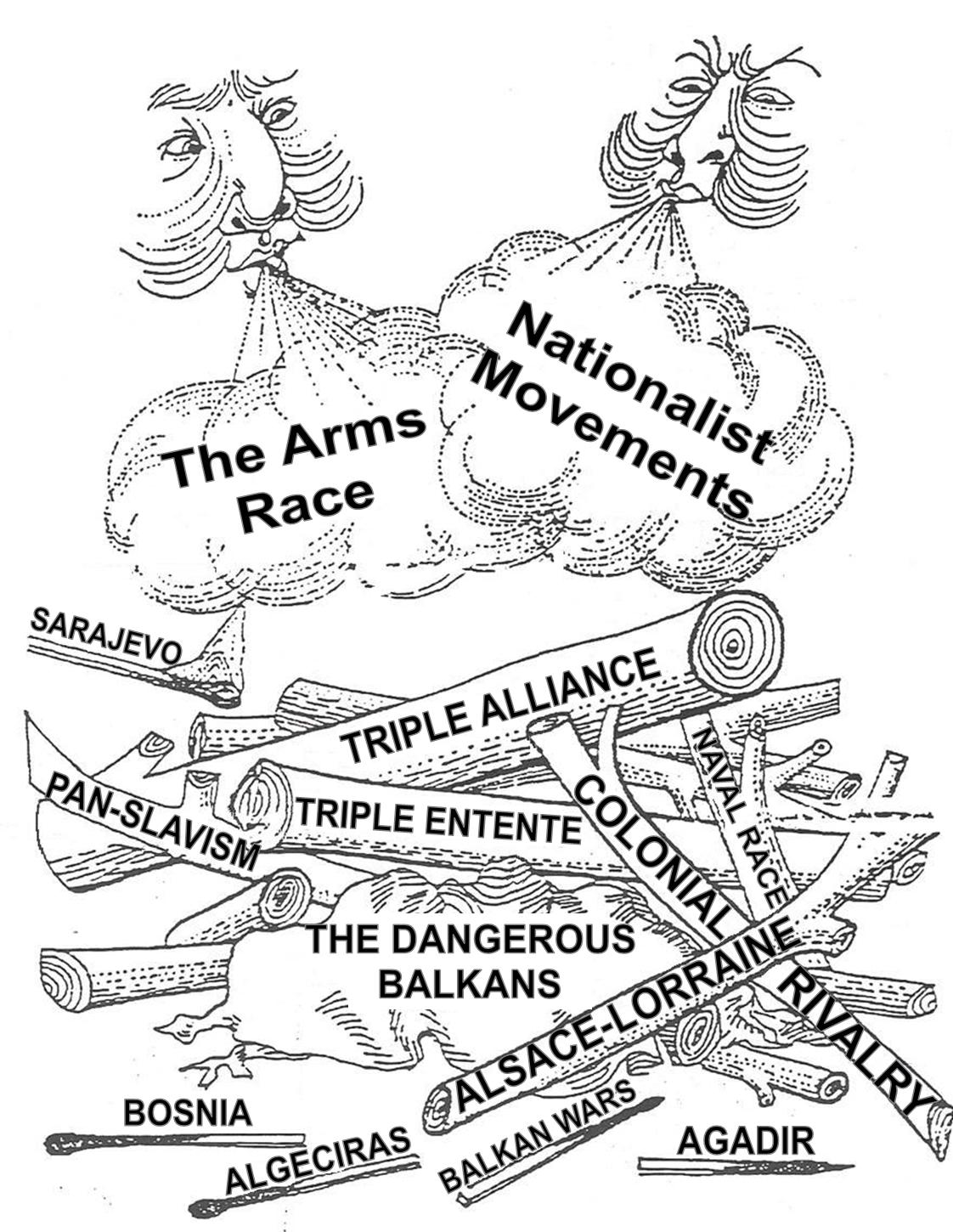
World War I broke out in the year 1914. Like all other wars in history, there were reasons for why World War I started. One of those reasons was militarism. Militarism can be defined as the belief that a strong military force is beneficial. During the years before the war, some countries in Europe built large armies and navies and powerful military officers took charge of the civil authorities. The militaries of each country had also planned mobilization during this time as well. Because of these secret battle plans, other countries began to spy on. The results of this were that there was an increase in the hatred and the fear from one country to another. With countries organizing and preparing for war, of course other countries would start to fear you. They would also want to prepare themselves as well while also trying to make sure that their ways of preparing were better than the other country's ways of preparing for war.


Another cause of World War I was nationalism. Nationalism is loyalty and pride for one's own country. Many countries in Europe had a lot of pride in themselves. They believed that they were better than other countries. Germany was one of the countries that showed their pride by making nationalistic speeches and text. When the other countries in Europe heard about this, they wanted to show Germany that they were not better than them. They wanted Germany to lose the feeling of national superiority.


One of the other causes of World War I was the assassination of Archduke Francis Ferdinand on June 28, 1914. He was assassinated during his visit to Sarajevo by a Serbian nationalist. This had angered the people of Austria-Hungary because Ferdinand was the heir to the Austrian throne. They considered the assassination an open attack from Serbia. Now Austria wanted to make sure that Serbia was no longer a threat to Austria, but they knew that if they were to start a war with Serbia, they would need the support of Germany. Germany agreed to help Austria because they believed that Austria was an ally of Germany.

Friday, December 18, 2009

Opium Wars-Imperialism in China


The Opium Wars took place during the mid 1800s between the British and the Chinese because of the illegal trade of opium, hence the name Opium Wars. Opium was a drug originally used for medical reasons. But, after the British introduced the idea of mixing opium with tobacco so that it could be smoked, people started to become addicted to the substance. Because of this addiction, the British made a lot of profit from selling opium. We know that people who use drugs too much often suffer the consequences. Those who used opium felt the effects of using it so much and China's population became weak. The Chinese government noticed opium's bad effect on the Chinese people and decided that they would not allow opium to be sold for smoking. Those who were caught going against this would be punished by being banned or executed.


Despite this new rule, the British continued to bring in more opium to China. They bribed government officials, who were corrupt, and managed to bring them into the illegal opium trade. The Chinese government discovered that there was still an illegal opium trade taking place and didn't do much about it for a while. Eventually, the Chinese government decided to make an effort to stop this madness by having government officials destroy any opium being imported into their land. The British wanted to stick up for their trade rights and decided to take action by taking their places in Canton, the trading port by which the opium was being imported into China. This was when the Opium War officially started. The British had won this war because they were more technologically advanced and also because their military was stronger than China's military, which was corrupt.

Thursday, December 10, 2009

Film Lesson: "Mountain of the Moon"


Recently in our Global 3 class, we watched a movie called "Mountains of the Moon" featuring Richard Burton and John Speke. While these two men explored Africa, they experienced many hardships, just like many other Europeans at that time. In Africa, diseases caused by mosquitoes, like malaria, were very common. This is why Burton and Speke were shown sleeping with mosquito or insect guards over them. There was one scene in the movie where John Speke was sleeping without a guard to protect him from the insects. This caused a beetle to crawl into his ear. They had to drop hot wax into Speke's ear and soon after Speke jammed a spear into his ear. Another hardship faced by these two men in Africa was when they entered a different territory. In one of the scenes of the movie, Burton and Speke entered the territory of a group of "colorful" Africans. They told the men that they could not enter their territory without bringing them gifts. In some cases in history, people have gotten into battles because one person entered a different territory without the permission of its owner.


Burton and Speke came across a body of water. They named this body of water Lake Victoria, after the Queen of England. This is very strange because they named a lake after the Queen of England and this lake is located in Africa. It would make more sense if they named a body of water in England after the Queen of England or if they named that body of water they encountered in Africa after an African leader. The movie had a scene where one of the two men took out a gun and threaten one of the Africans. The Africans appear to have not known what this object was. This is one of the primary technological advantages that Europeans had over Africans during this time. Europeans were more updated with their weapons. Europeans were eventually able to conquer Africa so easily not only because they were more advanced in their technology but because they were also more united than the Africans. The African people had different tribes who would occasionally end up in a battle with each other for land most of the time. Europeans, on the other hand, worked together and were more united. With teamwork, of course you can wipe out the other team.

Monday, December 7, 2009

Imperialism Project


Over the past couple of days, our Global 3 class has been working on an Imperialism project because we are currently working on the Imperialism unit. We completed this project so that our class could see the effects of imperialism. Imperialism is when a powerful country or nation takes over another foreign territory. For this project, we attached things like cotton, tea, gold, and products related to that onto the project map. We also drew shipping lines on the map to show the trade routes of some of the countries. For example, England needed cotton to make more clothing in their factories, especially since there was an increase in demand for clothing. They discovered that India had cotton in their country so they decided to sail to their country to get the goods they needed.


For this project we also colored in countries, not only because our teacher wanted the paper to look pretty, but to show which countries took over which territories. My partner and I learned that England took over places like Canada, Eastern United States, and many countries in Africa. There was a slave trade between the New World and Africa during this time as well. Spain took over many countries in South America and a few countries in the Caribbean. This can explain why many countries in South America and in the Caribbean speak Spanish today. This project helped us learn that European countries participated the most in imperialism.

Thursday, November 19, 2009

Karl Marx and Communism


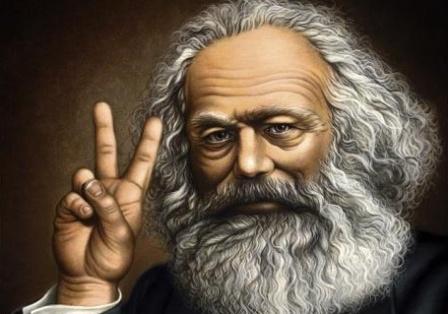
Communism is basically a system that has a goal to get rid of private ownership and to also get rid of the classes of a society. Karl Marx was not happy with the Industrial Revolution. He believed that it was wrong how the factory owners would most of the money while the factory workers worked long, exhausting hours and got paid a low amount of money. Karl Marx's idea of communism was pretty much the same as the definition I provided above. He wanted everyone to share equal wealth, not one person to be paid more than the other just because of their position in the classes of the society.


Karl Marx wanted communism to take over the world because he believes that history has been a series of class struggles, mainly between the working class and the owners of the capital. The owners of the capital would be having all the fun while the working class would work these long hours with only a short period of time for food. This is why Karl Marx saw the owners of the factories as the 'bad guys' and the factory workers as the 'good guys'. He predicted that the 'good guys' would stand up for themselves and try to overthrow the 'bad guys' so that they could try to make a change of the situation.

Tuesday, November 17, 2009

Karl Marx and the Industrial Revolution


Due to the poor treatment of workers in Europe, Karl Marx wasn't seen as a big fan of the Industrial Revolution. Women and children had to be sent out to work in factories just so that they could support their families since they were poor. They had no other choice after being struck with poverty. Factory owners liked that children were available to work because they were easier to control. The heartbreaking thing was that they were controlled by being violently beaten so that they could follow orders. Children were used to get coal from unsafe places in the mines and since they had small hands they would be ordered to reach into parts of machines. Sometimes young workers were forced to work eighteen hours a day, which didn't leave a fair amount of time for a much needed rest. Workers in a factory weren't even paid a well amount of money.


This is the reason why Karl Marx believed that factory workers should control the factories instead of the landlords. Maybe that way conditions wouldn't be so unjust. Karl Marx wanted workers to become one and go against their factory owners instead of keeping quiet and continuing to be treated unfairly. Factory owners lived the good life, something they did not deserve. It is the main reason why the Industrial Revolution inspired Karl Marx to invent Communism. Communism is basically the idea that people share the same wealth in a society. Communism wasn't all that good, though. These types of governments were strict and dictatorial. Workers would be forced to work on massive pieces of farmland. Those who wanted to print news stories criticizing the government weren't allowed to. If they decided to go against the Soviet government, they would suffer the harsh consequences.